
Custom Microscope Accessories: Pain-Free Precision Guaranteed
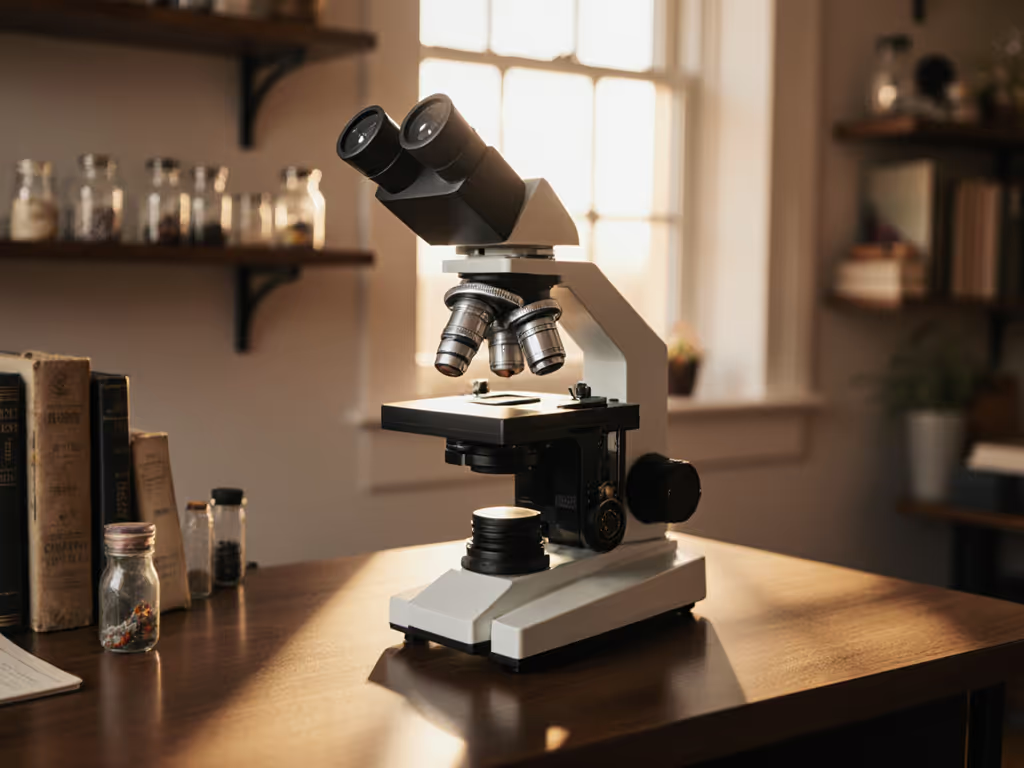
As a long-session hobbyist who's spent countless hours exploring microscopic worlds, I've learned that custom microscope accessories aren't just luxuries, they are essential tools that transform frustrating sessions into joyful discoveries. When you invest in bespoke microscopy solutions that align with your specific needs, you're not just upgrading equipment; you're creating the conditions for sustained focus and better results. Over the years, I've witnessed how the right accessories can turn a mediocre hobby experience into something truly remarkable, where time seems to disappear not because you're enduring discomfort, but because you're completely immersed in discovery.
Why Standard Accessories Often Fall Short for Serious Hobbyists
If you've ever hunched over your microscope for more than 30 minutes, you've likely experienced the subtle creeping of discomfort that steals your attention from the fascinating specimen before you. Standard accessories often prioritize universality over ergonomics, creating what I call the "compromise cascade":
- Poor posture adaptation: forcing you to adjust your body instead of the equipment
- Glare and eye strain: from microscope illumination that wasn't designed for extended viewing
- Inefficient workflow: requiring constant readjustment that breaks your focus
- Inconsistent results: because the accessory wasn't made for your specific specimen type
I remember a particularly transformative afternoon photographing pond algae, what should have been a tedious session became pure magic after I raised the scope, softened the glare, and added a simple wrist rest. For capture tips that reduce glare and motion, check our steady microscope photography guide. The images improved dramatically because I wasn't rushing or squinting through discomfort. That experience taught me a fundamental truth: comfort is performance when the session runs long.
Your Most Pressing Questions About Custom Microscope Solutions, Answered
"How do I know when I've outgrown standard accessories?"
You're ready for custom solutions when you notice these subtle but significant signs:
- You're spending more time fighting your equipment than observing specimens
- You experience repetitive strain after sessions that used to feel effortless
- Your documentation (photos/videos) shows consistent quality issues that aren't your technique
- You're avoiding certain specimen types because your current setup can't handle them
- You find yourself jury-rigging solutions with household items (rubber bands, tape, etc.)
Your comfort is a performance spec. Ignoring ergonomic mismatches isn't just uncomfortable, it is systematically degrading the quality of your observations and documentation.
"Won't custom accessories be prohibitively expensive for a hobbyist?"
This is perhaps the most common misconception I address. While custom solutions can carry higher upfront costs, consider the long-term value:
- Eliminated wasted time: No more sessions ruined by discomfort or incompatible equipment
- Extended equipment lifespan: Properly matched accessories reduce strain on your core microscope; regular maintenance basics keep optics clear and parts smooth
- Enhanced output quality: Better images mean more satisfying results per session
- Saved frustration: The intangible value of uninterrupted flow during observation
Think of it as investing in your hobby's longevity, wouldn't you rather spend $100 on a solution that transforms your experience than $50 on something that continues the cycle of frustration?
"How do I determine what custom accessories I actually need?"
The most effective approach is systematic self-assessment. Try this gentle pacing checklist before investing:
- Track your discomfort patterns: Note when strain begins during sessions (e.g., "after 25 minutes, my neck aches")
- Document your workflow pain points: What adjustments do you make constantly? (e.g., "repositioning light 12 times per session")
- Identify your specimen limitations: What can't you observe well with current equipment?
- Prioritize by frequency: Address the issues that disrupt your sessions most often first
- Consider future needs: What specimens do you want to explore next year?
This method has helped countless hobbyists avoid the "shiny object syndrome" that plagues our community, purchasing accessories that solve problems they don't actually have.
Spotlight on Game-Changing Custom Accessories for Hobbyists
SP Bel-Art Autoclavable, Reusable Polycarbonate Vaccu-Pette
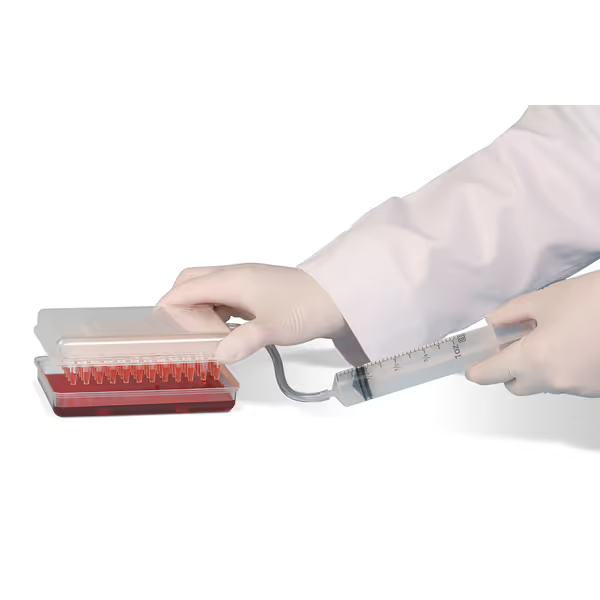
SP Bel-Art Vaccu-Pette Pipetting Device
For hobbyists exploring cell cultures, pond water samples, or even molecular gastronomy (yes, some creative enthusiasts use microscopy in culinary applications!), this 96-well pipetting device represents exactly the kind of specialized tool that transforms tedious work into efficient exploration.
Why this belongs in your custom accessory toolkit:
- Ergonomic efficiency: Harvests 25-300µL from 96 wells in less than 10 seconds, eliminating repetitive strain from manual pipetting
- Precision that matters: Each of the 96 tips holds exactly 15µL, ensuring consistent sample handling
- Durability for hobbyist budgets: Autoclavable construction means years of reliable use rather than disposable frustration
- Workflow revolution: Connects to a standard syringe (not included) for vacuum-based liquid transfer
What makes this genuinely special for long-session hobbyists is how it addresses the "forgotten ergonomic factor" in microscopy: the strain that accumulates in your hands and arms from repetitive sample handling. I've spoken with microscopy hobbyists who've used similar devices to reduce sample preparation time from 45 minutes to just 5, transforming what was once a chore into a seamless part of the observation process.
Real user experience: One biology teacher turned hobbyist microscopist reported using this device for educational outreach: "The students can now focus on the fascinating microscopic world rather than struggling with tedious sample preparation. Their attention stays on the science, not their aching hands." This aligns perfectly with my core belief, when physical strain disappears, curiosity flourishes.
Considerations for your needs: While the Vaccu-Pette shines for liquid handling, check if your microscope setup requires additional compatibility adjustments. Some users report needing custom mounting solutions to integrate this with certain hobbyist microscope stands. The device measures 12.7Lx8.6Wx3.7Hcm (5x33/8x17/16"), so ensure you have adequate bench space for comfortable operation.
Building Your Custom Accessory Strategy: A Practical Checklist
Choosing the right custom accessories requires thoughtful planning. This checklist has helped hundreds of hobbyists make strategic investments.
The Compatibility Triad - Verify each accessory satisfies all three:
- ✅ Physical compatibility with your microscope model and bench space — see our compatibility guide
- ✅ Ergonomic compatibility with your body mechanics and session length
- ✅ Workflow compatibility with your specimen preparation process
The Investment Timeline - Prioritize upgrades in this sequence:
- Foundation first: Address posture and eye comfort (these affect every session)
- Workflow enhancers: Tools like the Vaccu-Pette that reduce repetitive strain
- Specialized capabilities: Advanced imaging accessories for specific specimen types
"But I'm not a researcher - do I really need custom solutions?"
This question touches on a fundamental truth about hobbyist microscopy: We often underestimate our own needs because we're comparing ourselves to professional labs. But consider this:
- Professional researchers typically use equipment for 2-3 hours per session with breaks
- Serious hobbyists often push through discomfort for 4-8 hour marathon sessions
- Professionals have institutional support for ergonomic optimization; we're on our own
Your hobby deserves the same attention to sustainable comfort as any professional pursuit. Explore proven ergonomic accessories that reduce strain during long sessions. When I timed that algae photography session, I wasn't being indulgent, I was recognizing that my enjoyment and the quality of my observations were directly tied to how well my setup supported my body. The difference between a frustrating hobby and a lifelong passion often comes down to these seemingly small comfort considerations.
Taking Your First Strategic Step
You don't need to overhaul your entire setup today. Start with one strategic investment that addresses your most frequent pain point. Here's your immediate action plan:
- Tonight: Spend 10 minutes documenting exactly where discomfort begins during your sessions
- This week: Measure your workspace and identify one accessory that would solve your top pain point
- This month: Research one custom solution that addresses that specific need (like the Vaccu-Pette if repetitive pipetting is your bottleneck)
Remember that perfect should never be the enemy of good. I've seen hobbyists delay upgrading for months waiting for the "perfect" solution, when even a modest ergonomic improvement creates immediate benefits. Comfort is performance when the session runs long, and your journey toward pain-free precision starts with one thoughtful step.
Your microscope isn't just a tool; it's your portal to infinite worlds. Treat it, and yourself, with the care that such wondrous exploration deserves.